Change.
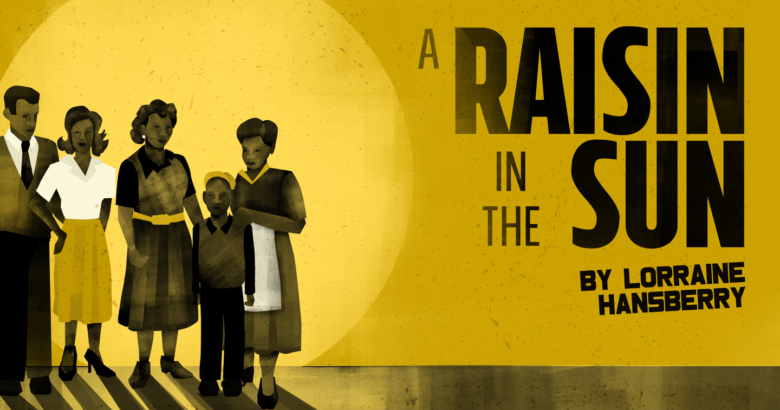
I recently finished reading a play, “Death of a Salesman,” about a month ago for my English class. It was a pretty exciting story, as it delves into a common man’s complex issues, such as conflict of dreams and failure. Willy, the play’s main character, is a magnified representation of these problems, seen especially throughout the story itself. I have already written a couple of blog posts about him. As I kept analyzing Willy's character further and further, it reminded me of Walter Younger's temperament from the "Raisin in the Sun" by Lorraine Hansberry. This parallel is primarily seen during the beginning of the play when Walter was the most disillusioned.

Throughout the plays, the characters Willy Loman and Walter Younger go through comparable financial situations, familial problems, and false ideas; however, each ends up in a very diverse position at the end because of their contrasting ability to change themself.


Through all of their circumstances and actions, one can clearly tell how each character resembles each other. Despite all of this, Willy stays in a state of delusion, ultimately taking his own life still chasing his desires, whereas Walter regains his pride and goes through a period of growth. It’s this stark difference that caught my attention. What made them diverge into such opposite paths? When I looked into it further, Willy lacks one key thing that Walter has: the ability to change.
I know that being adaptable is essential, but is it so influential that the lack of it leads to situations like Willy's demise? Frankly, yes. Ok, maybe it's not that drastic, but it can still have a considerable impact on not only yourself but the people around you as well. Since it's such an important subject, I knew that I had to research more about change itself, not only for myself but also for anyone who also reads this blog post. For this reason, I think that it's crucial to examine the two characters, Walter and Willy, to see what exactly led to them being on the opposite ends of the changeability spectrum.

As a science person, I thought it would be fun to connect a couple of psychological papers about change with Willy and Walter. The first paper I looked into was written by Swedish researchers Dr. Lena Forsell and Dr. Jan A. Astrom, analyzing resistance to change from many different lenses and relates to past studies. They mention being resistant is characterized as not being open to new experiences but by displaying insecurities and extreme mood swings.

The researchers also investigated the connection between change and the attachment theory, which delves into the realm of childhood attachment to parents. They assert that children who have had minimal contact with their caregivers, like parents, don't feel obligated to explore new environments, developing an early version of opposition, which just gets worse as time goes on. In his childhood, Willy's father reportedly left him to go to Alaska when he was two, then his brother also left when Willy was seventeen. Not much is said about his mother, but it's clear that his father and brother's absence created this internal shell, developing his ideal image of success and stubbornness.
In the paper's discussion section, Forsell and Astrom mention how fear is the issue's crux. In Willy's case, his lack of adaptability could stem from the fear of failure and his belief that his methods are the best and only way to achieve his aspirations. This fixation leads him to alienate those around him as he adopts a mindset of my way or the highway, to the extent where he thought that suicide was the best decision at the time. Walter’s character is pretty similar to Willy's at the beginning of his arc due to his similar fear of failure and lack of financial stability. As he turns down the money that Mr. Lindner offers, Walter overcomes this fear and, in turn, his resistance to change.
Another interesting thing I noticed in this article was the analysis of body language with personality; specifically, the part where the researchers describe, "downward angling of the head and infrequency of hand movements are expressions of resistance to change"(Forsell, Astrom). That description reminds me heavily of Willy's stature in one of the covers of the play.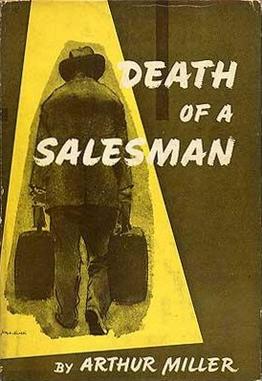

This relationship is impressive, as it translates well with the two people we are comparing. Willy has a low number of people who can have some social interactions, like his wife, two sons, and his one friend Charley. To make matters worse, it seems that he only regularly interacts with his wife, as his two sons don't live with him, and he only goes to his friend to ask for money. This lowers his social interactions with family and friends to the minimum, kind of a loner. Not to mention that his life satisfaction has hit rock bottom. All of these factors contribute to Willy's lack of adaptability, as the study suggests.

In contrast, Walter is surrounded by many more people who have a more consistent role in his life, like his mother, sister, wife, son, and friends like Bobo and Willy Harris. During the beginning of the play, Walter had low life satisfaction yet high social support, adding up to moderate adaptability. As Walter went through some more life-changing moments, he had the foundation to be built up to be more adaptable through his relatively higher social support.
Also, you have to mention Walter's and Willy's receptiveness to each of their family and friends. Being the oldest in his family, Willy is used to giving orders and guiding his wife and sons without giving much consideration to what they think. This mentality decreases social support effectiveness, as Willy cannot accept their concern or love, but only respect. Conversely, Walter somewhat heeds the advice of the people around him, especially from his mother, who still can guide him through life's problems. This elevates the effectiveness of the social support that Walter receives, bolstering his ability to adapt even more.

All in all, we went through a lengthy but informative journey about two very complex and realistic characters. They go through pretty comparable situations and mistakes, which leave them with guilt and shame. However, one can deal with it, and the other gets swallowed by it. They also have similar aspirations and desires, often conflicting with their family. However, one can change, and one isn't able to. This fundamental difference leads their lives in such opposite ways. Through further analysis, we do find out that Willy is a product of his own environment, lacking many necessities that Walter was able to attain, leading him down that path of resistance to change. But, Willy can't be exempt from all blame due to just his environment, as he commits some not-so-smart decisions and never confronts the effects that come with it. On top of that, he doesn't listen to the people around him, resorting to only listen to himself. Walter could look around him and consider the people around him, even if it was too late, giving Walter motivation to change himself further. At the end of the day, Willy is the poster child of resistance to change, demonstrating the countless harms that accompany it. Simultaneously, Walter is the embodiment of change, serving to inspire the common person to keep changing themselves for the better.
Comments
Post a Comment